




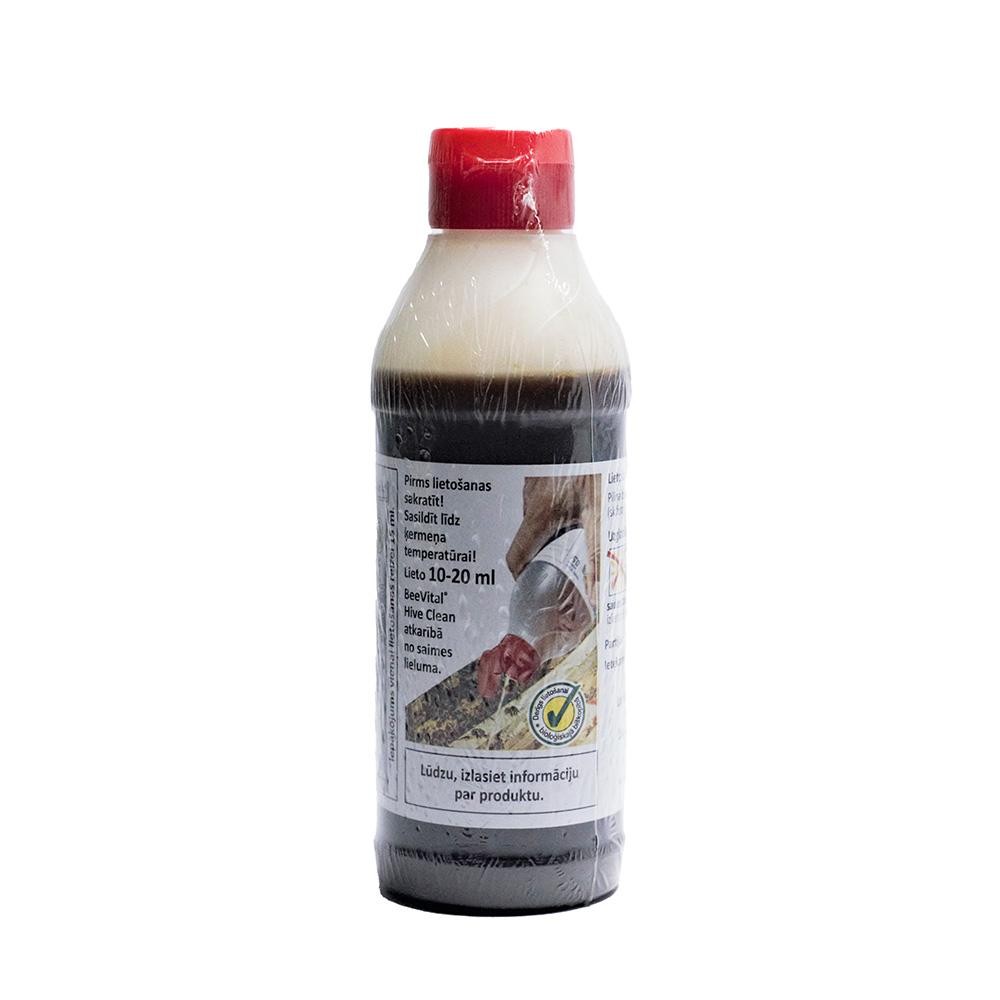
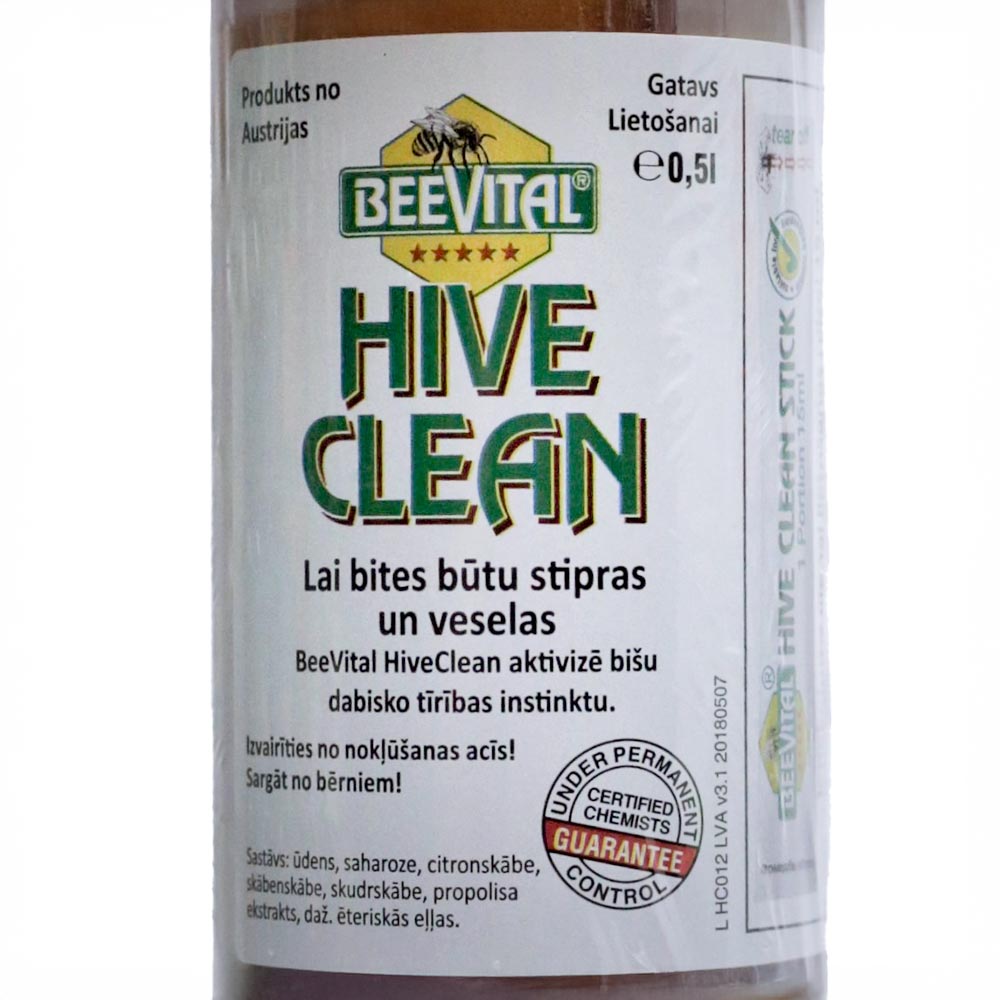
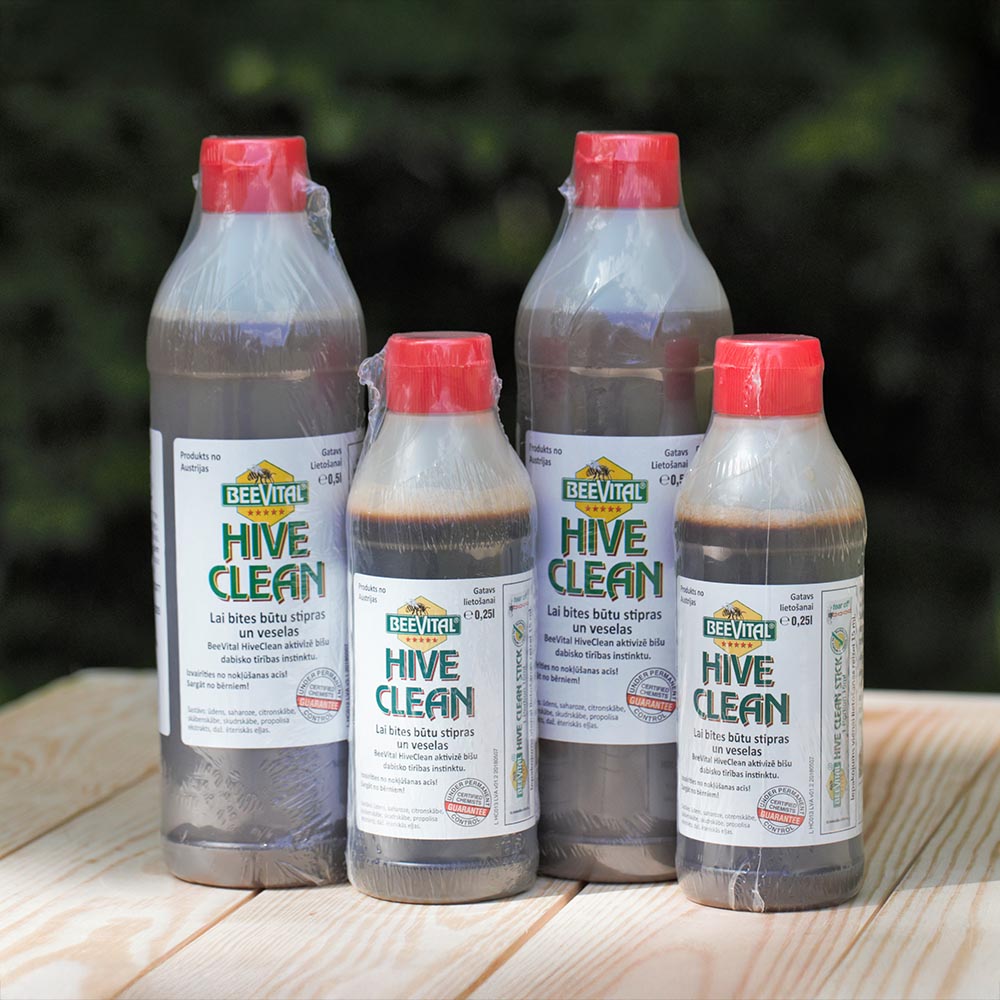

Hive Clean 250ml
14,50 €
BeeVital Hive Clean 250ml Ingredients : water, sucrose, citric acid, oxalic acid, formic acid, propolis extract, essential oils.
Storage : Store tightly sealed at room temperature. Avoid freezing. Keep bottle away from light! Use within 6 months after opening.
Easy to use -The required application rate per treatment is 10-20 ml, depending on the size of the colony. Shake before use! Avoid contact with eyes and keep away from children! Warm BeeVital HiveClean to body temperature. Use when the outside temperature is between minus 1 and 25 degrees Celsius. If the temperature outside is too high, the bees will leave the nest and the effectiveness of the effect will be low. The best time for treatment is late afternoon when most of the bees are in the hive. Approximately 15 ml of BeeVital HiveClean should be injected into the middle 7-8 combs where the varroa is most abundant. Approximately 15 ml should be added to the mid-frame spacing of the colony, with the wax bridges cleaned beforehand to facilitate treatment.
How it works : The effect is only on the outside of the bee body, is based on natural foundations and has no effect on the quality of the honey. When dripped between the frames of the hive, the solution forms microscopic sticky droplets that stick to the hairs of the bees. The bees pass them on to other bees in the hive. BeeVital HiveClean activates the bees' cleaning instinct and they also start to clean out dead brood. Bees that are heavily infested with varroa and weakened leave the hive and can be found dead in front of the hive. HiveClean changes the smell of the bees. Varroa perceive this as a change in the smell of the food source and leave the host. The parasites fall to the hive floor and starve to death. Death is not caused by exposure to chemicals. The result can be seen on the hive floor and not in the cells. When used correctly, BeeVilal HiveClean has no negative effects on bees, brood or queens.
Correct time of use : In spring, when the bees have started collecting pollen, in sufficiently warm weather, carry out a test treatment by dropping 15 ml of BeeVital HiveClean between the brood combs and the next morning assess the number of varroa on the hive floor If a high number of varroa is detected, carry out the full treatment cycle. Anything done before September will benefit the overwintering bees. All later treatments will have an effect the following season. July and August Monitor the situation in the colony after honey removal. Most of the varroa are in the brood at this time. The simplest method is to inspect the brood on the hive floor. November and December, when outside temperatures are above 0 degrees Celsius, treatments can be applied above the overwintering cambium. In this case, you will get rid of the last frogs, which can live for about 6 months. A control test can be carried out at any time of the year.
Hive floor abrasion test : Apply a mesh or sticky decking to the ceiling of the varroa floor and drip Bee Viltal HiveClean. The next morning, count the fallen frogs. The result gives a rough idea of the level of infestation. In colonies with peri, the number of varroa doubles within a month. If the number of dead frogs is greater than 30, an active period of pre-frog development in the brood is necessary. Within about 18-20 days, all the new varroa are on the bees and treatments can achieve an efficiency of almost 100%.
Scope Day 1
Effective until day 8
Day 6
Effective until day 14
Day 13
Effective until day 18
With this scheme, the colony will be ready for a safe overwintering at the end of summer.
| Weight | 0,3 kg |
|---|---|
| Dimensions | 50 × 50 × 160 mm |
Related products